
WHAT I DO.
I help organizations move from uncertainty to action, using strategic foresight and human-centered design to find people-centered solutions to complex business problems.
Most organizations think their foresight problem is a data problem. It usually isn't. The breakthroughs come from combining wide, exploratory horizon scanning with the discipline to act on what you find, building real things, with real people, before the rest of the market sees it coming.
I've done this at scale: leading the ethnographic research and use case creation behind a fraud-detection partnership between a Fortune 500 health organization and a federal agency, saving over $38M in its first three months. I've built service blueprints — mapping a chronic-care patient's full journey from diagnosis to self-management — that turn research into deployed solutions, not just recommendations.
The throughline in all of it: get the right people at the table. Community voices represented and advocated for, not just consulted. Designers in the room from the start, not brought in after the model's already built. And a team comfortable enough with uncertainty to build the plan as they go.
My core tools: strategic foresight, horizon scanning, scenario planning, journey mapping, service blueprinting, human centered design, and qualitative and research — used through advising, consulting, mentoring, and hands-on collaboration. The goal is always the same: make ideas stick, make outcomes achievable, and make innovation relevant.
Blueprint Services to Plan Future States

Service blueprinting and journey mapping to map how a customer actually experiences a service — and where an organization's strengths can be leveraged to close the gaps. Mapping emotional state alongside every touchpoint — from isolation and fear at diagnosis to confidence and community by year 13 — to identify where education and support were failing patients.

Framework for the experience women want during and after delivery in OB unit based on user interviews
Uncover Opportunities
Most requests for "innovation" are really requests for direction. Leadership wants growth, a recent acquisition needs integrating, customers are quietly walking away, or a market shake-up has made the old plan obsolete — the framing changes, but the underlying ask is the same: where do we go from here? I go in and find out. Methods I use include domain-specific innovation landscaping, organizational assessment, competitive analysis, stakeholder interviews, workshops, and ethnographic research — whatever it takes to turn uncertainty into a place to start.
Develop Concepts for New Services and Products
I've helped develop and implement 50+ products and services across healthcare, consumer goods, manufacturing, and education. Concept development isn't a single moment of inspiration — it's iterative, moving from rough sketches to tested prototypes, and it works best when the right people are in the room to push on it. I run workshops built to get cross-functional teams past their first, safest idea. Years of teaching in college and university classrooms taught me how to build that kind of room — pulling from improv, human-centered design, and business strategy so people feel safe enough to try something half-formed out loud.
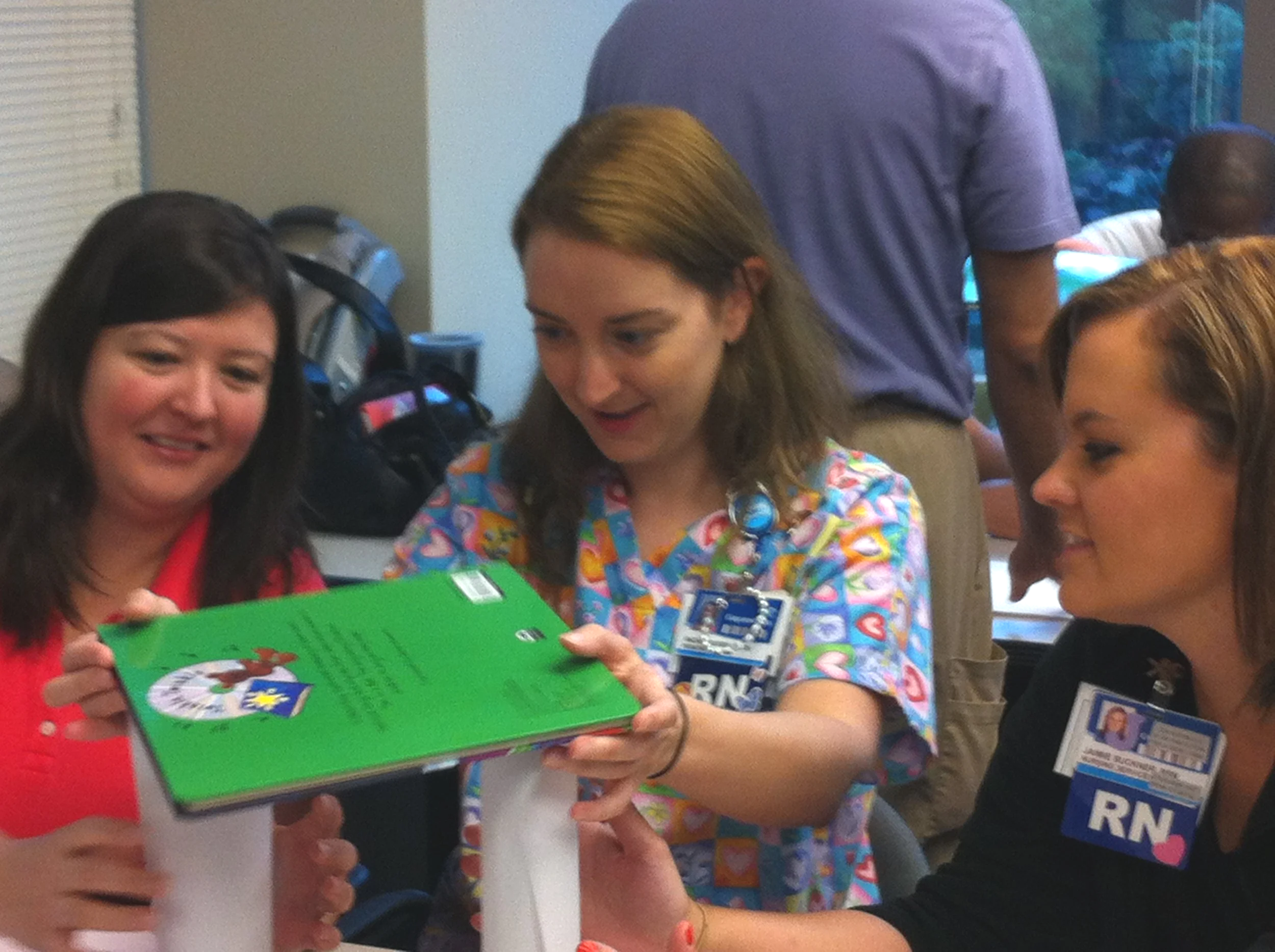
Design Thinking Workshop — NICU Teamwork Initiative, Carilion Clinic
Introducing nursing staff to design thinking methods as part of a project to improve patient experience scores through stronger care team collaboration in the NICU.
USPS + Optum — Physician Credentialing Fraud Prevention
Conducted stakeholder interviews and developed 23 use cases addressing fraud, waste, and abuse across the USPS partnership — this set focused specifically on physician credentialing.
Map Journeys, Identify Gaps, and Develop Use Cases
A journey map or service blueprint does one job: make the invisible visible. Every service has gaps a customer feels but can't quite name — I build the map that shows exactly where they are, then develop use cases to test what happens if you close them. I meet the work wherever it already stands, find where an organization's real strengths are being underused, and design from there.

Design Research — In-Store Engagement for Retail Loyalty Programs
Field research observing store associates and shoppers to identify friction points in credit card sign-up conversations
Conduct User Research to Better Understand Your Customers
People don't tell you the truth until they trust you're not going to judge them for it — that's the real work before the research even starts. I go into the field to observe, interview, and shadow customers and frontline staff in their actual context, whether that's a hospital unit, a retail floor, or a call center, or someone’s home because what someone says in a conference room rarely matches what they do when no one's watching. I'm looking for the invisible forces — power, trust, unspoken assumptions about who gets listened to — that shape behavior long before anyone names them out loud. That's often where the real opportunity is hiding. Methods I might use include contextual inquiry, ethnographic field studies, ride-alongs, photo, shadowing, structured and unstructured interviews, surveys, and diary studies, depending on how deep the question requires me to go.
Coach, Train, and Mentor People to Innovate and Create
The best research and strategy work doesn't mean much if it stays with me — it has to build capability in the people who'll carry it forward after I'm gone. I've spent years teaching in college and university classrooms, which taught me how to create a room where people feel safe enough to try an idea out loud before it's fully formed. I bring that same approach into workshops and client teams: less "here's the answer," more building the muscle for people to find their own. Whether I'm running a concept-generation workshop, coaching a team through their first service blueprint, or mentoring someone learning to facilitate research for the first time, the goal is the same — leave people more capable than I found them, not just handed a deliverable.

Design Thinking Workshop — Optum Rx Co-Creation Conference
Facilitating a "How Might We" ideation session as part of a large-scale Optum Rx co-creation conference (300+ participants), generating concepts to improve care for people affected by opioid addiction.