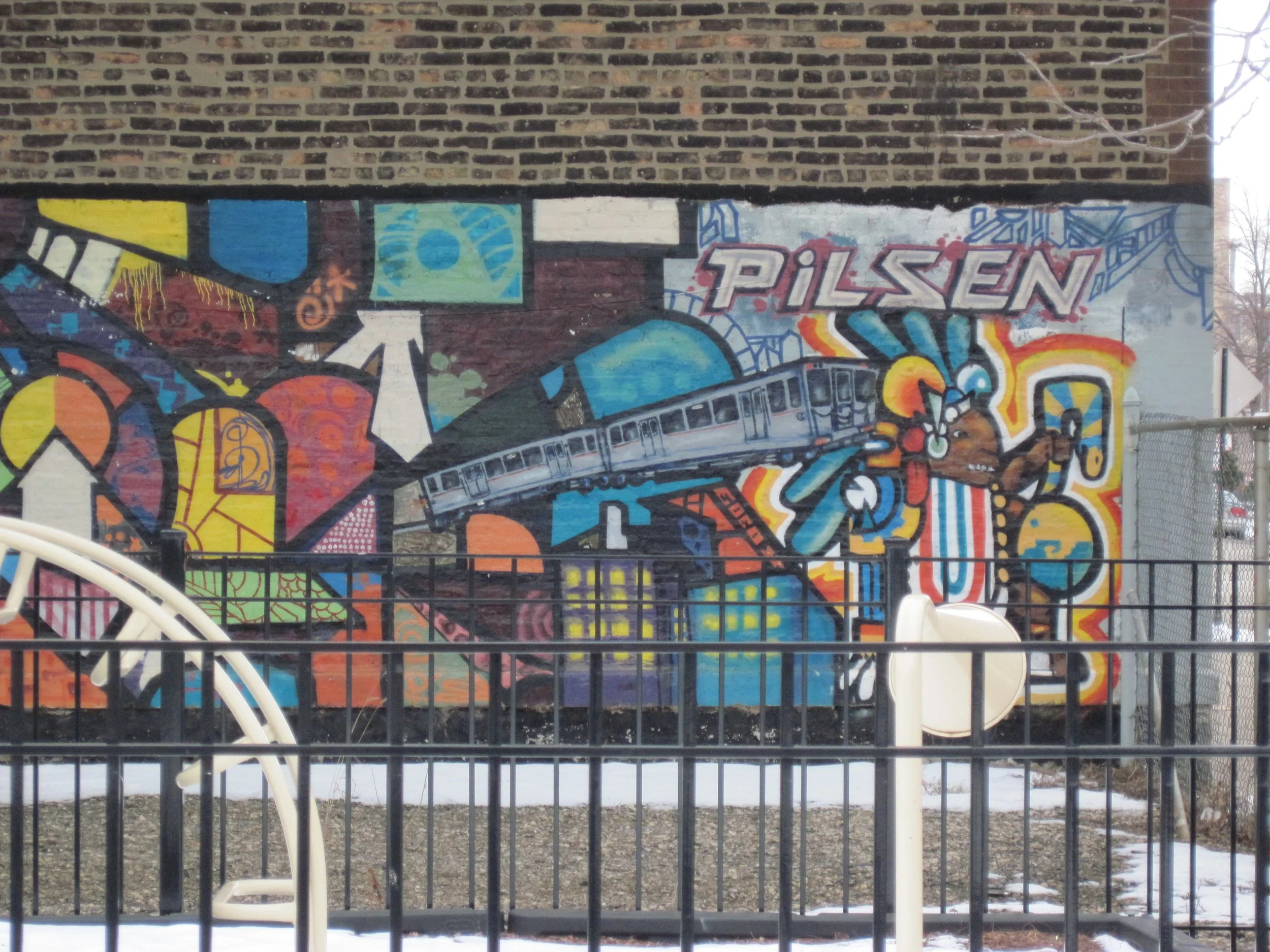
What Pilsen Teenagers Taught Me About Wellness — and What the Technology Won't See
In 2009, I spent a year doing participatory research with teenagers in Pilsen, Chicago inside a larger research project — studying how a diabetes epidemic was reshaping, motivating and constraining wellness inside Latino families navigating the disease. The work has been the backbone of every choice I've made since. The teens were the ones who taught me what wellness actually meant.
The project was Communidad Bienestar, led by the late Dr. Judith Gregory at the Institute of Design (ID) , in partnership with Esther Sciammarella and the Chicago Hispanic Health Coalition. Dr. Gregory had secured a grant to investigate the diabetes epidemic in Chicago's Hispanic communities — I went to the Institute of Design to work with her. She was my teacher and mentor; the way I came to do this work was hers. My focus inside the project was the teenage participants.
I ran the teen workshops, alongside my talented teammates. I designed and led a community-walk photography session — the kids documented their own wellness landscape with their own cameras, and those photographs became the raw material for the workshops we then ran together. I co-designed the Health Landscape game with Gladys Rosa-Mendoza, Marco Cimatti, Pinxia Ye and Jennifer Frisbie — a board with cards that mapped what challenged, motivated, and constrained wellness for teens inside Mexican-American families navigating diabetes. The year concluded with a large interactive participatory research session that brought adults and teens into the same room.
Four things from the teen table have stayed with me.
The picture-sorting exercise that worked for the adults failed with the teens. When I asked if the video cameras recording the workshop bothered them, they all said yes, by nodding their heads and becoming quiet. They wouldn't say the words out loud. What worked was handing them cameras outside the workshop room and walking their neighborhood. They photographed the murals. They explicitly didn't photograph the graffiti. They pointed out where they ate, shopped, went to school, where their friends lived, where they caught the bus. They had clear, articulated value judgments about their own community that the adult conversations weren't capturing.
The cameras themselves were the question they couldn't answer in public.
The most significant insight: they were already caregivers. They translated for their parents back into Spanish, navigated paperwork their parents couldn't read, carried the pressure of being the most fluent member of a family that depended on them to interface with the English-speaking world. Wellness, for them, was never about themselves. It was about the people they were already taking care of.
And the word "wellness" never quite fit. The word the community used was bienestar — broader, warmer, encompassing family, dignity, presence, the quality of leisure time. Wellness reduced to physical health was something the program was trying to do. Bienestar was what the teens were navigating.
Seventeen years later, those teenagers are in their thirties. Some are raising kids of their own. Their kids will be teenagers in 2031.
That's the five-year horizon I keep thinking about.
I spent the last several years scaling the creation of a strategic foresight program at a major health insurer. We specifically looked at Wellness as a domain to monitor. Three tensions kept coming up. AI-mediated personalization will get sharper and faster, and it will keep struggling to read the cultural texture those Pilsen teens carried in their photographs — the difference between a mural and graffiti. Between translating words and translating care. Between wellness and bienestar. Wearables and biometric sensors will tell us more about bodies than any generation has measured, and they will still miss what the teens told me without words — that being recorded changes what gets shared. And precision nutrition, vertically or hydroponically farmed, AI-recommended diets will solve some access problems and create new dignity problems, because access without bienestar is compliance dressed in better packaging.
Here's the claim I keep coming back to:
The technology will tell us more about wellness than we've ever known. The Pilsen teenagers told me what it still won't see.
They knew this in 2009. They didn't have the vocabulary for it. But they pointed at it in their photographs — and in everything they chose not to photograph.
What's the wellness conversation you're trying to have right now that the technology isn't quite letting you have?
#Diabetes Research #DesignFutures #FoodAsMedicine #ParticipatoryResearch #Photovoice
My Blog:
A space where I write about things I'm thinking about, hearing about, and just curious about.
